
The darkest lenses aren’t automatically the best choice for a day on the water. Sunglasses for boating need to manage reflected glare, state their UV protection clearly, and feel comfortable without making key boat screens difficult to see. A poor fit or hard-to-read display can become distracting, especially as conditions change.
Polarized lenses can reduce reflected glare, which may make it more comfortable to look across the water. But polarization isn’t the same as UV protection, and it can affect how some LCD displays appear. The right pair depends on where and how you boat, the light you expect, and what feels comfortable on your face.
This guide explains how to compare glare control, UV ratings, lens tint, fit, and onboard visibility. You’ll also learn what photochromic polarized lenses may offer in changing light, which trade-offs to consider, and how to care for eyewear after time around water.
Key Takeaways
- Choose Sunglasses for boating by matching lens features to your usual light, time aboard, and equipment needs.
- Check the UV protection rating separately from lens darkness, and compare the labeling before choosing.
- View your boat’s LCD screens through polarized lenses at different angles to see how clearly they remain readable.
- Test frame fit for comfortable, secure wear, then consider polarized or photochromic polarized styles based on your priorities.
Why Sunglasses for Boating Need More Than a Dark Tint
Sunglasses for boating are worn in bright, open conditions where sunlight reflects off the water and brightness can change as clouds move or the boat shifts direction. They should also feel comfortable during extended outdoor wear. A dark lens may reduce visible light, but it doesn’t tell you whether the lens has UV protection or how it handles reflected glare.
Water-surface glare can make it uncomfortable to look across the water for long periods. The brightness may distract or prompt squinting, especially in direct sun. Glare control is one useful feature to weigh alongside UV information and fit, not a guarantee of safer navigation or clearer vision in every condition.
Polarized lenses use a filter that reduces some reflected glare, particularly light reflected from flat surfaces. This may make a bright surface more comfortable to view, but it won’t remove all glare. Polarization and UV filtering are separate lens characteristics, so consider them independently.
How reflected glare affects comfort on the water
Sunlight reflecting from water can create a bright, shimmering field that competes for your attention. Polarization filters some of the reflected light before it reaches your eyes. For a plain-language explanation of how it works, see How Polarized Lenses Work.
The practical benefit is reduced glare discomfort, not a promise that you’ll see hazards, objects below the surface, or boat controls more clearly. Conditions, lens design, and viewing angle all matter. Treat polarization as one way to manage reflected brightness, then weigh it against your onboard needs.
UV protection is not the same as lens darkness
Tint describes how much visible light a lens lets through. UV protection describes how the lens filters ultraviolet radiation. These qualities aren’t interchangeable: a dark-looking lens doesn’t prove it blocks UV, and a lighter-looking lens may provide UV protection if its specifications state that clearly.
Look for explicit protection information, such as a stated UV400 rating or 100% UV protection claim, and compare the labeling when shopping. Polarization alone doesn’t establish UV protection. For more on this distinction and why it matters, read this guide to UV-protected sunglasses.
How Polarized Lenses Affect Glare and Onboard Visibility
Polarized lenses contain a filter that reduces some reflected light, which can make bright, shimmering water more comfortable to look at. The effect varies with sunlight, the water’s surface, and the direction you’re facing. Polarization is not the same as ultraviolet filtering, so assess UV protection separately rather than assuming one feature provides the other.
There’s also a practical trade-off: polarized lenses can make some LCD displays look dimmer or less clear, depending on the screen and your viewing angle. In short, polarization may reduce reflected glare for greater comfort in bright conditions, but it can affect how easily you read certain onboard screens.
When polarized sunglasses can help on a boat
Glare changes as the boat turns, the sun shifts, or the water surface changes. A polarized filter can reduce some reflected brightness, but it won’t remove every reflection or guarantee clearer views below the surface, better fish spotting, or safer navigation. Consider your usual conditions and how comfortable your eyes feel in them. For related water-based considerations, see this polarized sunglasses guide for fishing.
What to know about polarized lenses and boat screens
Some boat displays use LCD technology, and polarized lenses may make them appear darker at certain angles. The effect differs between screens, so don’t assume every display will be affected in the same way. If possible, try the eyewear while looking at the boat’s actual screens from the positions where you normally operate them.
Check the helm display from your usual seated or standing position, then shift your head slightly and look at any other essential LCD equipment. Notice whether text, numbers, and warnings remain easy to read. If a screen seems dim, compare the view without the sunglasses and consider whether the trade-off fits your onboard routine.
Make the screen check part of your selection process. A pair that feels comfortable while you look across open water may feel different when you glance down at a display. If you use screens frequently, readability may carry more weight. If you spend most of your time in bright conditions away from displays, glare comfort may be a higher priority.
Once you know which balance suits your boat and habits, explore polarized sunglasses as one option for managing reflected glare. Keep screen visibility in your decision.
Boating Sunglasses Compared: Lens Options, Light, and Fit
The right lens depends on more than brightness. Consider how much reflected glare you encounter, whether light shifts between open water and shade, and how often you look at onboard displays. Use the comparison below as a starting point, not a ranking. Comfort and visibility depend on your conditions and preferences. For every option, treat UV protection as a separate specification to verify.
| Lens category | Reflected glare | Changing light | Screen readability and comfort |
|---|---|---|---|
| Non-polarized | Does not use a polarization filter to reduce reflected glare. | Light filtering depends on the lens tint. | Doesn’t have the polarization-related LCD visibility trade-off; comfort varies by tint and wearer. |
| Polarized | Reduces some reflected glare. | Doesn’t automatically adjust as light changes. | Some LCD screens may look dimmer at certain angles; personal comfort varies. |
| Photochromic, including photochromic polarized | Glare control depends on whether the lens is polarized. | Designed to change tint with light, but behavior varies by lens and conditions. | Screen visibility depends on polarization and viewing angle; comfort is individual. |
Match lens choice to the conditions you encounter
For steady, bright exposure, polarized eyewear may suit someone who prioritizes reducing reflected glare. If your route moves between open sun and shaded areas, photochromic lenses may be worth considering, including photochromic polarized options. Their tint response varies by lens and conditions, so don’t assume a specific change speed or darkness. Screen use and the activities you do aboard also influence which features matter most.
For example, someone who checks LCD equipment often may prioritize screen readability, while someone who spends more time looking across bright water may give greater weight to glare reduction. Neither makes one category universally best. Weigh the trade-offs against your routine, and verify the lens’s stated UV protection separately from its category or tint.
Choose a secure, comfortable frame for a day afloat
Fit matters during hours of wear. The bridge should sit comfortably without pinching or slipping, and the temples should feel secure without creating pressure. Consider whether the frame provides the coverage you prefer, but don’t assume its shape establishes a particular performance claim. If possible, try it on before a long outing.
Move your head as you would while scanning the water, looking down at equipment, or turning to speak with someone nearby. Notice whether the frame shifts, presses at the temples, or distracts you. Fit is personal, so use these checks alongside your lens priorities when narrowing down Sunglasses for boating.
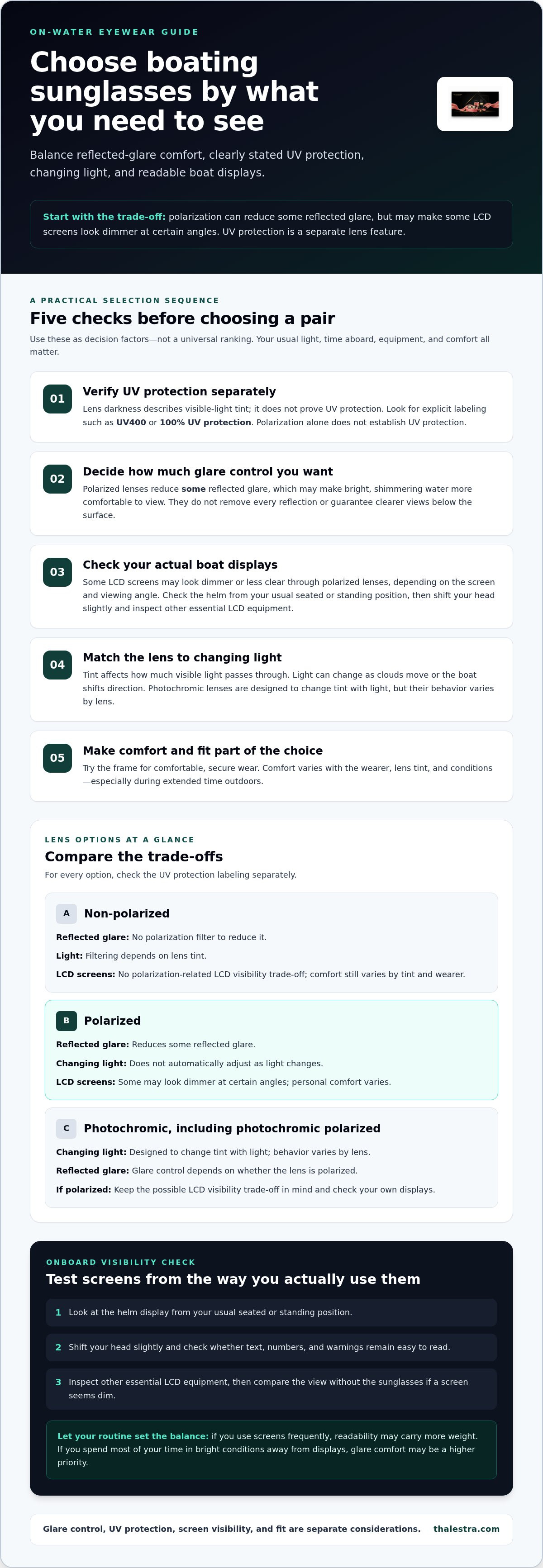
A Practical Checklist for Choosing Sunglasses for Boating
Compare options against your actual routine rather than choosing by appearance alone. If you spend long stretches in bright, open conditions, glare control and stated UV protection may matter most. If you regularly use displays or move between sun and shade, give screen readability and changing-light preferences more weight.
Five checks before choosing a pair
- Assess your usual conditions. Consider the brightness on your typical trips, how much reflected glare you face, and whether you move between open water and shaded areas. Your routine is a better guide than an occasional unusual outing.
- Confirm UV protection. Look for explicit UV information in the product description. Lens darkness and tint describe visible light, not the level of ultraviolet protection.
- Consider polarization. Polarized lenses reduce some reflected glare, but that benefit is only one part of the decision. Weigh it against your screen use and personal comfort.
- Check the displays you rely on. If practical, view your boat’s LCD screens through the lenses from your normal operating position. Notice whether the display stays easy to read as you adjust your viewing angle.
- Test the fit. Check how the frame sits at the bridge and temples. Turn your head and look down as you might during a trip, making sure the frame feels stable without pinching or pressing uncomfortably.
Before deciding, review product descriptions for specific lens and frame details. Separate stated features, such as polarization or a UV rating, from assumptions based on a product photo or a dark-looking tint. If the boat’s displays are central to your routine, prioritize screen readability. If you spend more time in strong reflected light, give glare comfort more weight. There isn’t one setup for every day afloat.
Fit and care for repeated use around water
A comfortable frame should stay in place during ordinary movement without creating pressure that becomes distracting over time. Try natural head turns and downward glances before a long outing. Coverage is a personal preference, so focus on how the frame feels and suits your activities rather than assuming its shape guarantees a particular level of protection.
After time around water, rinse away residue with fresh water when appropriate, then dry the lenses with a clean lens cloth. Don’t place lenses face-down or wipe away grit while they’re dry, since rubbing particles across a lens can cause scratches. For a fuller routine, use this guide to cleaning polarized sunglasses.
Use your checklist to compare options, then browse polarized sunglasses alongside photochromic polarized styles as you consider glare and changing light.
Explore Polarized Sunglasses for Your Next Boating Day
With your priorities clear, browse polarized sunglasses as one category to consider for Sunglasses for boating. Compare each item’s stated lens details and frame style with the light and equipment you encounter on board. The category can help narrow your search, but the product details show which features are described for a particular pair.
Browse polarized styles with your priorities in mind
Polarized lenses are an option for reducing some reflected glare. As you browse, look for the specific information shown for each pair rather than assuming every polarized style has the same tint, fit, or additional features. Consider the frame description and whether its shape and fit suit your day-to-day use.
Keep your priorities in view as you compare. If glare comfort is high on your list, polarization may be relevant. If you use LCD equipment, remember that screen visibility can vary with the lens, display, and viewing angle. Check the product’s stated UV information separately, since polarization alone doesn’t establish UV protection. Don’t assume boating certification, water resistance, floating ability, impact protection, or a particular UV rating unless the product description specifically states it.
A quick comparison can keep the decision practical:
- Lens details: Note the stated lens type and any described features.
- Frame and fit: Compare the listed style with what feels comfortable and stable to you.
- Onboard use: Consider your screen habits and typical light conditions alongside the product information.
This approach helps you compare options without relying on a photo, category label, or assumption to fill in missing details. Choose based on the stated specifications and your own comfort priorities.
Consider photochromic polarized sunglasses for changing light
If your boating day includes shifts between brighter and more shaded conditions, photochromic polarized sunglasses are another category to explore. Photochromic lenses are designed to change tint with light, but the degree and speed of change can vary by lens and conditions. Don’t assume a particular transition time or darkness; use the information provided for the individual item.
Keep the same checks in view: screen visibility remains a separate consideration, and UV protection should have its own stated information. Compare the listed details with your routine, whether you spend more time in open sun, move between different light conditions, or regularly glance at onboard displays.
Ready to compare polarized and photochromic styles? Browse sunglasses at THALESTRA.COM.
Make Your Next Pair a Thoughtful Choice
Before your next outing, decide what you want your eyewear to do for your routine, then use that as your filter while browsing. The best Sunglasses for boating are a personal choice shaped by comfort, the light you encounter, and the way you use your boat. Let those priorities guide your comparison instead of choosing on appearance alone.
THALESTRA.COM offers polarized sunglasses and photochromic polarized sunglasses, giving you two categories to explore as you narrow your options. Review the product details and focus on the features that matter to you. A clear, deliberate choice can make getting ready for time on the water feel simpler.
Browse polarized and photochromic sunglasses to compare styles for your next boating day.
Frequently Asked Questions
Are polarized sunglasses better for boating?
They can be a good choice if reflected light is a frequent source of discomfort on your usual routes. For Sunglasses for boating, weigh that glare benefit against how often you need to read displays or use a phone outdoors. If you alternate between steering and checking a screen, test the view from both positions before settling on polarized lenses. Comfort and equipment use help determine whether they suit you.
Can polarized sunglasses make a boat screen harder to see?
Yes, some LCD screens can look darker or less clear through polarized lenses, and the effect may change as you move your head. View the displays you rely on from the helm and other usual positions. Check them straight on, then at the angles you naturally use. If important information becomes difficult to read, consider whether a different lens choice better fits your setup.
Do polarized sunglasses block UV rays?
Not necessarily. Polarization and UV filtering are different features, so a polarized label alone doesn’t tell you how much ultraviolet protection the lenses provide. Look for explicit UV information in the product details, such as a stated UV rating or protection claim. Don’t use lens color or darkness as a substitute. This check matters even if glare reduction is the main reason you’re considering polarized eyewear.
What lens tint is best for boating?
There isn’t one tint that suits every boater or condition. Consider how bright your usual outings are, how comfortable the tint feels when looking at the water, and whether it makes the view too dim when clouds roll in or you move into shade. If possible, try the lenses in lighting similar to your typical trips. Compare the stated lens details rather than choosing by color alone.
Are photochromic sunglasses suitable for boating?
They may suit boaters who experience changing light, but their tint response varies by lens and conditions. A route that shifts between open sun and shade is a useful situation to consider, though no particular transition speed or darkness should be assumed. If the lenses are also polarized, consider screen readability separately. Review the specific product details and UV information before deciding whether the combination fits your routine.
How should I clean sunglasses after boating?
Rinse off loose residue with fresh water when appropriate, then gently dry the lenses with a clean lens cloth. If grit is visible, don’t rub it across a dry lens, and avoid using clothing or paper products that could scratch the surface. Let the frames dry before storing them, and follow any care instructions supplied with the eyewear. A dedicated case can help protect the lenses between outings.
Can I wear regular sunglasses on a boat?
Yes, if they’re comfortable for your activity and their product details state the UV protection you want. “Regular” doesn’t indicate whether lenses are polarized, and appearance alone can’t establish UV filtering. Also consider whether you’ll need to read LCD equipment, spend long periods in bright conditions, or move between sun and shade. Those practical needs can help you decide whether your everyday pair is suitable for the trip.